Paris 1968
Paris 1968 - Worker and Student Uprising
Student activism had been increasing across Europe and America during the mid-1960s, against the background of: the Vietnam War; calls for greater personal and sexual freedom; an increasing interest in Marxist, anarchist, and Situationist ideas; and opposition to capitalism and consumerism.
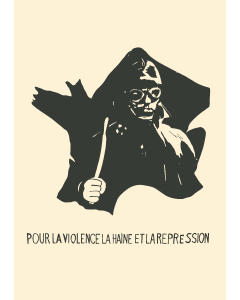
On 2 May 1968, an anti-Vietnam War demonstration at Nanterre was brutally attacked by the police and for several hours there were running battles between the police, with batons and tear gas, and students who were ripping up cobble stones and throwing them.
On 6 May, 20,000 students and teachers marched towards the University’s Sorbonne campus. The march was again attacked by the police wielding batons. The police had underestimated the level of resistance they would face as some of the marchers created makeshift barricades, helped by local residents, and threw cobbles at the police – who responded by firing tear gas and charging the demonstrators. After a sixteen-hour battle, hundreds of students had been injured or arrested, suffering severe beatings and abuse in custody.
On 10 May, a crowd of 30,000 gathered and was again brutally attacked by the police. Throughout the night, hundreds of people were injured – this time it was broadcast live on the radio and shown on TV the following morning, shocking France.
Over the next few days, Popular Action Committees were set up across France, as students occupied universities and demonstrations spread to workplaces, particularly public sector jobs, manufacturing and service industries. The Odéon National Theatre was occupied and made into a permanent assembly hosting open debates about how to remove the Government and how a future society should be organised.
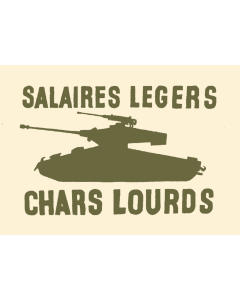
On 18 May, the trade unions called a General Strike for wage increases and over two million workers came out. Thousands of students joined picket lines and factory occupations. By 23 May nine million were on strike and the country was paralysed.
By 29 May, the Government was in chaos. President De Gaulle left Paris. For six hours nobody knew where he was, and Prime Minister Pompidou exclaimed he had “fled the country”. The following day, de Gaulle returned – having been at the French military base in West Germany seeking reassurance that the army would intervene should there be a communist coup. In a televised speech he framed the crisis as a communist plot and ordered workers to return to work.
Later that day a demonstration, of up to 800,000 conservatives and military veterans, marched shouting “Vive de Gaulle” – this gave de Gaulle’s Government reassurance that it had enough support and the following day a General Election was announced for 23 June.
In the days and weeks that followed workers were violently evicted from the factory occupations – a student was killed at the Renault factory at Flins during a four-day battle, and two workers were killed at the Peugeot factory at Sochaux. Several left-wing organisations were banned and the police retook the Sorbonne campus and the Odéon.
De Gaulle won a massive victory in the General Election, and, in a postscript, revolutionary student demonstrations on Bastille Day (14 July) were brutally suppressed by the police.
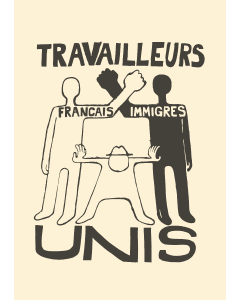
The uprising had come close to removing the Government and challenged the entire organisation and structure of society – without the leadership of political parties or trade unions (the major unions tried to restrict the scope of the uprising to ‘pay and conditions’ demands within the existing system and had agreed pay rises and a shorter working day with the Government) through spontaneous determined action by masses of students and workers.
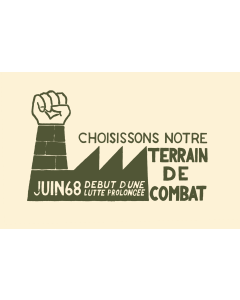
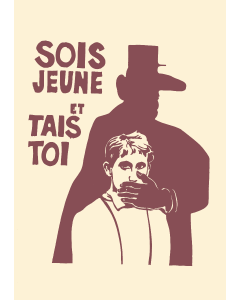
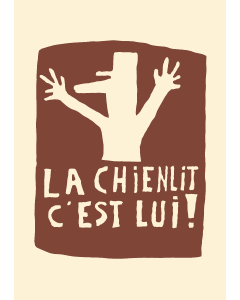
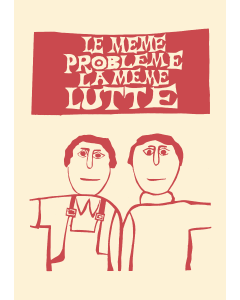
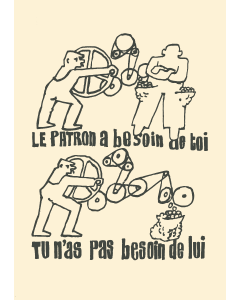
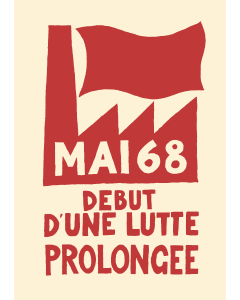
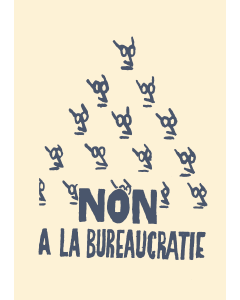
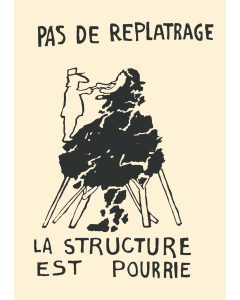
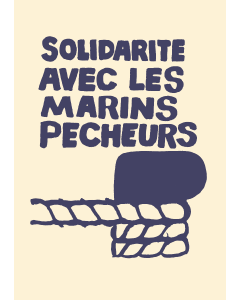
The posters, alongside a wave of radical graffiti, flooding the streets with their trademark simplicity – quick and easy to produce, but perfectly capturing the spirit of the hour with messages of hope and resistance – have stood the test of time.